Pinar Onal


Projects
Intention Recognition System for Adaptive Upper Limb Exoskeletons
Upper-limb exoskeletons can reduce worker fatigue and improve productivity, yet most lack the ability to interpret user intent and deliver timely assistance.
This project introduces a machine learning based intention recognition models and multimodal sensing framework that combines ultrasound, EMG, and motion sensors for adaptive control in wearable robotics.

Muscle Network Analysis for Adaptive Prosthetic and Wearable Systems
An innovative method to quantify human coordination, revealing what makes one person’s movement more efficient and adaptive than another’s.
This project used muscle network analysis to maps EMG connectivity in lower-limb amputees using EMG-controlled robotic prostheses and provide scalable, interpretable metrics to evaluate human–machine coordination.


Mechanical Haptic Interface for EMG-Controlled Robotic Prosthesis
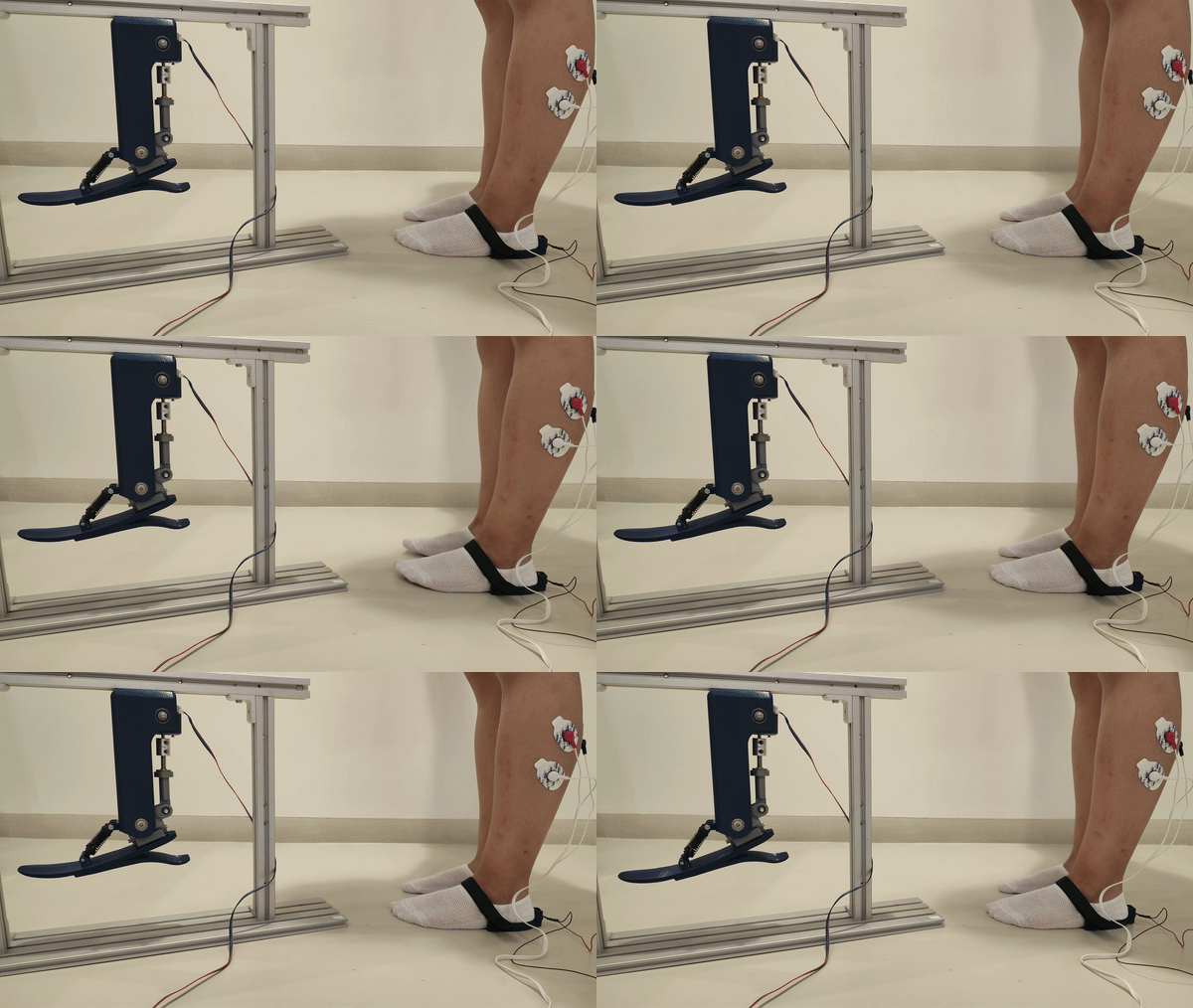
Design and development of electro-mechanical haptic feedback system that allows users to physically feel their prosthetic ankle movement through a force transmitted to the knee, inspired by the biarticular function of the gastrocnemius muscle.
By linking the knee and ankle joints through a shared actuator, movement at the ankle generates proportional force feedback at the knee, creating a physical communication channel between the user and the prosthesis that enhances control, confidence, and awareness while using the device.

Bioinspired and Cost Effective Ankle Prosthesis
This project focused on designing a robotic ankle prosthesis that mimics the natural motion of the human ankle. The system features a bioinspired joint mechanism modeled after the talus–ligament structure, allowing smooth inversion and eversion similar to real ankle movement. This work was presented at ICRA 2023, London as an example of affordable and adaptive prosthetic design.
StepCheck | Wearable Gait Trainer
Excessive foot pronation can cause musculoskeletal imbalances and increase the risk of injury. StepCheck presents an innovative wearable device that tracks foot pronation angle and pressure distribution using accessible sensors by providing interactive feedback to promote foot health. It demonstrates an affordable and engaging method to monitor gait dynamics and correct excessive pronation through guided exercises.

Haptic Feedback Perception Research
This project investigated how people perceive and explore tactile feedback to better design haptic interfaces that simulate the sense of touch. I developed a finger-tracking experimental setup and MATLAB visualization tool to analyze exploration patterns, and assisted in a study on electrovibration-based tactile perception through human subject experiments and data analysis.
